
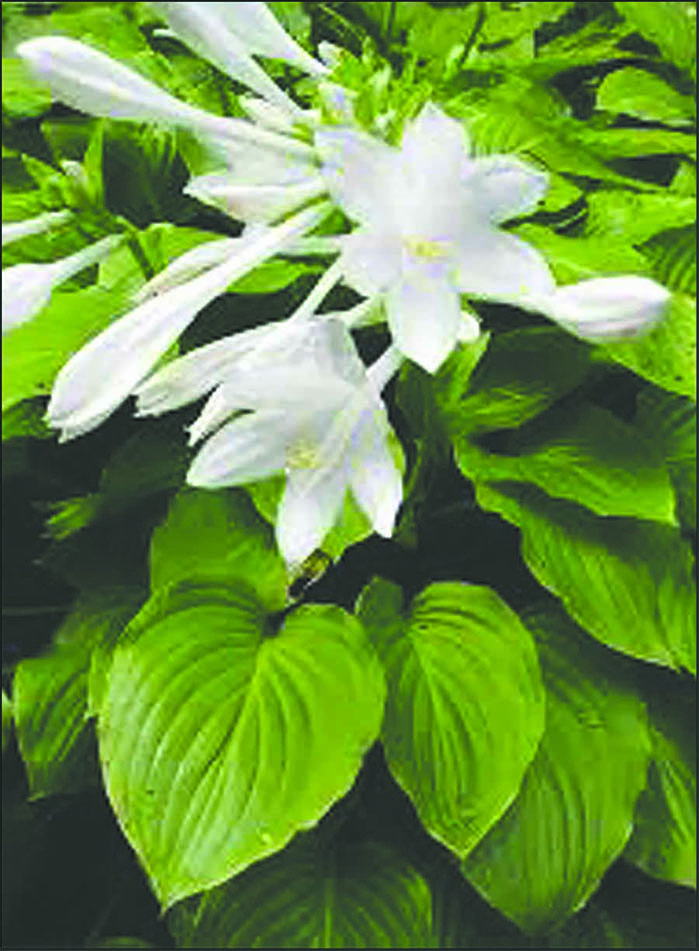
Hostas are one of the most popular perennial landscaping plants of all, producing a bloom in late spring to early summer.

Some gardeners prefer the leaf structure of the hosta and remove bloom stems as they appear to allow plants to use all of their energy to produce and maintain leaf canopies instead of flowers.
By Lin Johnson
A little summertime hosta care will go a long way towards keeping your hosta plants beautiful, vibrant, and full of foliage all season long. Hostas are one of the most popular perennial landscaping plants of all. But, many hosta plants begin to show signs of serious wear and tear not long after blooming.
Remove Spent Bloom Spikes – The majority of hosta plants bloom in late spring to early summer. As soon as hosta plants have completed their flowering process, cut the bloom stems back to the base of the plant. By removing stems after they flower, the plant’s resources are then concentrated back to only growing and maintaining great foliage.
Many gardeners who prefer only the hosta leaf structure never allow plants to bloom at all. Instead, they remove bloom stems as they appear. This way, plants can use all of their energy to produce and maintain massive leaf canopies, and not flowers.
It’s Time to Fertilize – To keep plants thriving in mid-season, a bit of fertilizer is necessary. Although spring fertilizing is important, mid-summer fertilizing is a must as well. Be on the Lookout for Pests – Slugs, aphids, beetles and a whole host of other plant-eating insects love to feed on the leaves of hostas.
Aphids can usually be controlled simply by spraying plants with a steady stream of water. Slugs and other pests can be trickier, but early detection is the key!
If a hosta plant’s foliage has reached the point of no return. Simply by cutting foliage back to the ground, you will force the plant to grow new foliage from the base. Within a few weeks after cutting back, you will see the new starts begin to emerge. And before you know it, you will have a fully-leafed hosta plant once again.
Advanced Garland County Master Gardener, Lin Johnson, volunteers with Garland County Master Gardeners of the UofA Div. of Agriculture, Cooperative Ext. Service. Master Gardeners pool skills and resources to improve home horticulture, stimulate interest in plants and gardening, and encourage beautification. For more information, call 501-623-6841 or email adykes@uaex.edu. The University of Arkansas System Division of Agriculture is an equal opportunity/equal access/affirmative action institution.