
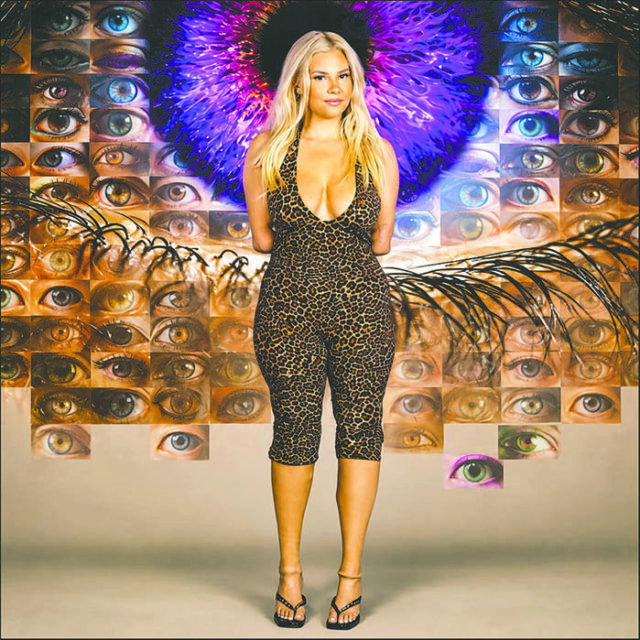
Real representation begins when we stop seeing the disability and start seeing the person. – Photography: Oxford Mail.
By Rick Bontkowski
Have you heard about Charlotte Nott? She’s 18 years old, a quadruple amputee, and one of the newest housemates on the UK version of Big Brother. Think about that for a second. A young woman missing four limbs has been dropped into one of the most mainstream social experiments on television.
Cameras everywhere, strangers living together, personalities colliding. There’s no carefully produced inspirational segment and no interviewer asking her how she “overcame adversity.” She’s just in the house.
And I’m fascinated to see what happens next, not necessarily with Charlotte, but with everyone else. I can hear it already: “Charlotte, you’re such an inspiration.” There will probably be questions about her limbs, her prosthetics, what happened to her, and how she does certain things. There will be curiosity, admiration, and maybe even a little awkwardness. I know that honeymoon well.
But then something wonderful will happen. They’ll get used to her. Charlotte will leave something lying around. She’ll annoy somebody. She’ll laugh too loudly. She might flirt with the wrong person, lose her temper, talk behind someone’s back, or become somebody’s closest friend. At some point, the quadruple amputee will disappear, and Charlotte will show up.
Maybe that’s one of the greatest signs of inclusion we rarely talk about: people eventually get bored with your disability. I don’t need everyone I meet to think I’m inspirational. Sometimes I’d rather you think I’m funny, opinionated, or interesting. Hell, spend enough time with me, and I’ll give you plenty of reasons to think I’m nuts.
Because amputees don’t exist to inspire people. We’re people: complicated, flawed, funny, irritating, loving, insecure, and interesting.
So, I hope Charlotte stays in that house long enough for the inspirational honeymoon to wear off. I hope her housemates eventually stop seeing four missing limbs and start seeing the young woman attached to them. Charlotte Nott isn’t interesting because she’s a quadruple amputee. She’s on Big Brother because Charlotte Nott is interesting. And that may be the best representation of all.
Rick Bontkowski, a Chicago native and amputee, is the host creator of The AMP’D UP211 Podcast. A drummer, cyclist, and advocate, Rick shares the stories of people with limb differences to inspire, inform, and challenge perceptions worldwide. Contact info: Ampup211@gmail.com, ampup211.com, youtube.com/@theampdup211podcast6, instagram.com/rick_bontkowski.
{Discover additional stories from Rick’s podcast on our website at thespringsmagazine.com/category/health-wellness/ampd-up211/.}