
Mistletoe – a Christmas holiday tradition.
By Vivian Walz
According to horticulturist Gerald Klingman, there are over 900 species of mistletoe worldwide. Elms are a common host to this obligate parasite (meaning it must be with its host or it will die), but mistletoe may also be found on any number of deciduous trees.
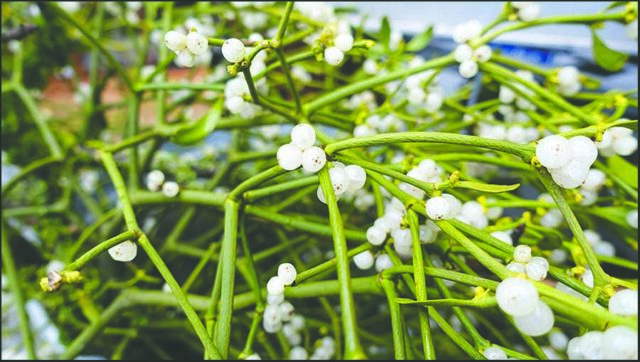
It is fairly easy to identify. It grows only on living trees by absorbing water and minerals to survive. These plants have green stems and oval, yellow-green, evergreen leaves with white berries appearing in late autumn and early winter. Healthy trees can withstand some mistletoe growth, but heavy infestations may damage the host tree. To keep this from happening, it is best to remove the entire infected tree limb before berries appear.
According to some sources, Mistletoe has therapeutic uses if carefully monitored. Ingesting the berries or leaves can produce side effects such as nausea, abdominal pain, changes in blood pressure, and even death. Care must be taken to protect children and pets. Birds, however, are immune to its toxins and act as agents to disseminate the berries.
Most of us know Mistletoe as that festive plant we hang above our doorways. It is the tradition during Christmas Holidays to stand under the Mistletoe and kiss our loved ones. This custom may be traced back to the Ancient Druids and to the Greeks. Norse mythology maintains it was used as a sign of love and friendship. The superstitious insist that good luck comes to those who kiss under the Mistletoe. What a wonderful Tradition!
Vivian Walz volunteers with Garland County Master Gardeners of the UofA Div. of Agriculture, Cooperative Ext. Service. Master Gardeners pool skills and resources to improve home horticulture, stimulate interest in plants and gardening, and encourage beautification.