
Spring is a great time to take an interest in learning more about supporting native bees and honeybees in your area.
By Alison Crane
The connection between bees and biodiversity and ecosystem health is a common theme among environmentalists. Bees pollinate about one-third of the world’s food crops. They indirectly aid in absorbing carbon dioxide by supporting the reproduction of plants and trees. Declining bee populations serve as a warning sign of broader environmental damage in an area.
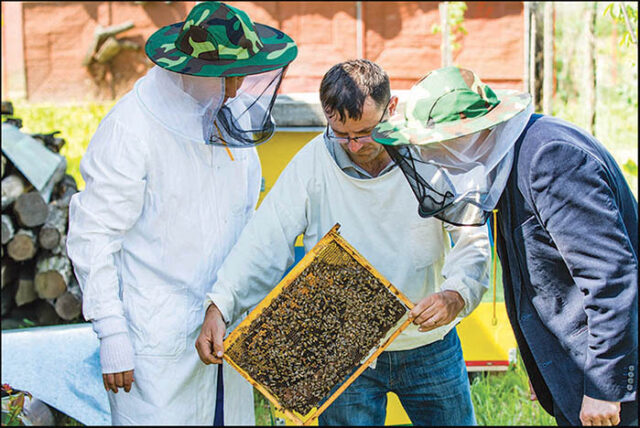
Supporting bee populations by providing floral habitats and nesting sites, avoiding the use of spray insecticides, or beekeeping can have an impact on the environment. But have you considered the impact supporting bees can have on your wellbeing?
While little is known about the full influence of bees on humans, researchers in Ireland found that farmers participating in the Let it Bee project, which targeted water source protection and biodiversity, experienced a positive impact on their well-being. The farmers were provided with bee hives and later were interviewed by researchers to explore how beekeeping affected the farmers and their families emotionally, psychologically, and socially.
The researchers found the effects of keeping bees revealed five central themes connected to wellbeing. Since beekeeping is good for the environment, there is a sense of pride that grows out of what is accomplished. Beekeeping evolves into a sense of togetherness with nature, family, and community.
Because beekeeping is a journey and not just something that can be learned through books, beekeepers experience psychological growth and relaxation through the process. Beekeeping also provides opportunities for beekeepers to utilize their character strengths.
Beekeeping or supporting bees allows creativity to grow and can even mitigate feelings of loneliness by connecting with local beekeepers and associations.
Spring is a great time to take an interest in learning more about supporting both native bees and honeybees in your area. Everyone can do something to help the bees do what they do. To learn more about beekeeping and supporting pollinators, contact the Garland County Extension Service at 501-623-6841 or email acrane@uada.edu. Visit our UAEX website for research-based information for you and your family.
Alison Crane is a Family and Consumer Sciences Agent with the Garland County Extension Service. Pursuant to 7 CFR § 15.3, the University of Arkansas System Division of Agriculture offers all its Extension and Research programs and services (including employment) without regard to race, color, sex, national origin, religion, age, disability, marital or veteran status, genetic information, sexual preference, pregnancy or any other legally protected status, and is an equal opportunity institution.
{Catch up on past articles by Alison at thespringsmagazine.com/category/health-wellness/crane/.}