
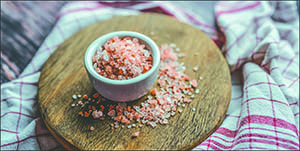
Salt: the spice that launched a thousand prescriptions.
By Alison Crane,
Breakfast cereal does not appeal to me. I typically will eat something a little more non-traditional when it comes to eating breakfast. Confession – I really enjoy a small handful of tortilla or corn chips for breakfast. And while I do have a sweet tooth, typically, I will choose something salty over something sweet (unless donuts are offered). So, when it comes to making good food choices, I struggle just like the majority of Americans.
One thing that typically helps people make better choices is to understand the why behind the instruction. For instance, we know we need to reduce our salt intake, but why? The typical answer is to prevent hypertension, because high blood pressure affects a number of conditions. That answer is accurate, but why does salt have that effect? To find the answer, we have to look to the kidneys.
I admit that when I first started digging into why salt is a key factor in heart health, I was not expecting the answer to be my kidneys. But because our body systems are all interrelated, we protect our hearts by protecting our kidneys through reducing our salt.
More than 120 quarts of blood are filtered by the kidneys each day. The kidneys collect the waste that leaves our cells, remove any toxins and excess fluid in our blood, and then send them to the bladder. This process works with a delicate balance of sodium and potassium. Too much salt throws off the balance, forcing the kidneys to work harder.
Over time, this can cause damage to the kidneys and make them struggle to remove excess fluid, and cause pressure to build in the blood vessels. This, in turn, causes damage to the blood vessels and forces the heart to work harder to pump the blood, which can cause the end result: heart disease.
For me, knowing the why of the importance of reducing salt is a light-bulb moment. It is not just the doctor telling me I have to do it or the nutrition experts giving me a list of good health habits. It is practical and becomes something that makes a difference for me personally, my family, my job, and even my future.
Here are a few simple ways to reduce salt in our diet:
- Prepare Your Own Foods.
- Eat High-Fiber Foods.
- Add Other Spices or Herbs to Enhance Flavor.
- Do Your Research Before Eating Out.
- Learn To Read Labels.
- Drink water, lots of water!
The good news is you may think food won’t taste good anymore if you stop adding salt, but our taste buds actually regenerate every couple of weeks, and that will help you retrain your tastes. For more information on how to reduce your salt intake, contact the Garland County Extension Office at 501-623-6841 or email
Alison Crane is a Family and Consumer Sciences Agent with the Garland County Extension Service. Pursuant to 7 CFR § 15.3, the University of Arkansas System Division of Agriculture offers all its Extension and Research programs and services (including employment) without regard to race, color, sex, national origin, religion, age, disability, marital or veteran status, genetic information, sexual preference, pregnancy or any other legally protected status, and is an equal opportunity institution.