
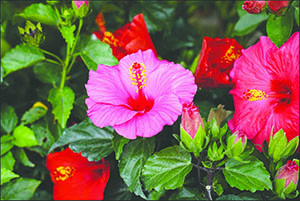
Hibiscus loves full sun and moist, well-drained soil, but can also tolerate short periods of drought once established.
By Sherry Davis
Few plants are as beautiful as the mallow hibiscus (Hibiscus moscheutos), also known as rose mallow or swamp hibiscus. With dinner-plate-sized blooms that can span up to 12 inches across, this perennial makes an unforgettable statement in any landscape.
The mallow hibiscus blooms from mid-summer through early fall, providing a dramatic splash of color when many other plants have begun to fade. Its flowers, in shades of white, pink, or deep red, often feature a strikingly contrasting throat, attracting pollinators such as hummingbirds, butterflies, and bees.
Native to wetlands and riverbanks of North America, it has adapted well to cultivation in home gardens. It loves full sun and moist, well-drained soil, but can also tolerate short periods of drought once established. Gardeners often plant it beside ponds, in rain gardens, or as a bold focal point in perennial beds.
Unlike its tropical cousins, this hibiscus can withstand cold winters, surviving in USDA Zones 4 through 9. Each spring, new shoots emerge from the ground, reaching heights of 4 to 6 feet and bursting into bloom by midsummer.
- Sunlight: At least 6–8 hours daily for optimal blooming.
- Watering: Keep the soil consistently moist, especially in hot weather.
- Pruning: Cut back stems to a few inches above the ground after frost; new growth emerges in late spring.
- Feeding: A balanced fertilizer in early summer encourages stronger growth and more abundant flowers.
In addition to its beauty, this hibiscus is a low-maintenance native plant that supports pollinators and adds ecological value to the garden. Its height and oversized blossoms ensure it will be the star of any planting scheme.
If you’re looking for a plant that combines drama, resilience, and ecological benefits, the mallow hibiscus deserves a place in your garden.
Sherry Davis volunteers with Garland County Master Gardeners of the UofA Div. of Agriculture, Cooperative Ext. Service. Master Gardeners pool skills and resources to improve home horticulture, stimulate interest in plants and gardening, and encourage beautification.