

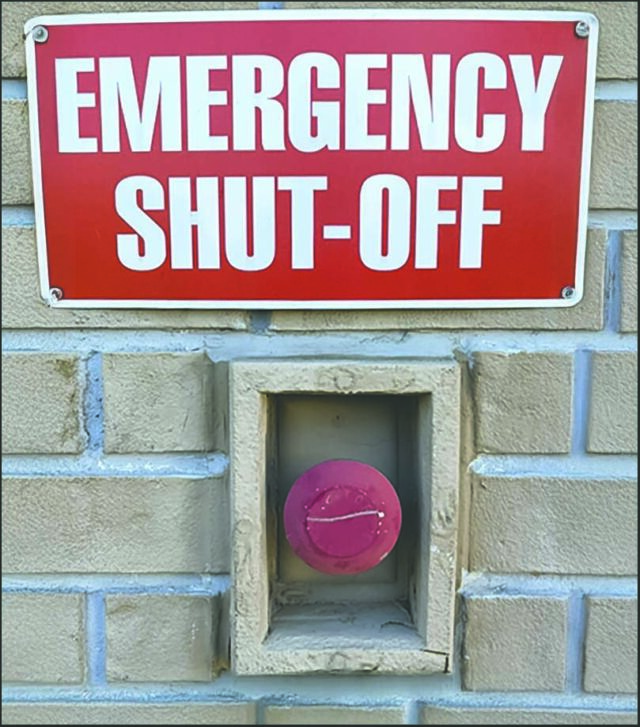
Note where the Emergency Shut-Off button is located, where you regularly fill up.
By Lana Pierce
If, as a child, you ever scooted your feet across the floor and zapped your classmate with a tiny finger-sized lightning bolt, then you might remember that it didn’t work too well in summer. But in winter—when dry meets cold and a static charge is built up in seconds—you could shock anyone within reach.
It is this principle that puts us in danger as adults, especially when fueling our vehicles. Unfortunately, drivers die each year when those tiny sparks meet fuel vapors as they pump gas, resulting in a sudden flash fire.
Sliding across a car seat, shuffling across pavement, even pulling on your coat can create a static charge. One of the leading causes of static-related fires at the pumps: getting back into the vehicle while filling up. Each slide in and out of the vehicle builds that static charge. If that static meets vapors, the result can be catastrophic.
Some rules to remember:
- Remain outside your vehicle while refueling and keep the nozzle in contact with the opening to your fuel tank. (It’s a grounding point.)
- If a fire happens, do NOT pull the nozzle out. Retreat from the fire and locate the gas station’s emergency stop button.
Almost every gas station has a big red button, usually located on the storefront, marked “Emergency Shut Off.” In case of any fire near gas pumps, hit that button and immediately call 911.
Do you use the same station frequently? Make a mental note to find that red button. It could save your life or the life of someone else.
Capt. Lana Pierce has worked for the NLRFD for 20 years and is a regular contributor to The Springs.